Who are we?
In Performance, we make sure our race car can unlock its full potential on track throughout the season. Already during concept phase, we provide in-house lap-time simulations that support other modules with data-driven decisions. These simulations are based on comprehensive vehicle models. For testing, we select and integrate sensors that are crucial for validating concepts and simulation results. We also develop efficient data-analysis workflows for the team. On track, we support performance with vehicle dynamics control functions such as traction control and torque vectoring, validated and optimized in full-vehicle simulations.
Because of the many interfaces, this module works closely with nearly all other modules. Relevant skills include programming (mainly Python), vehicle dynamics and control engineering.
What do we do and where can you get involved?
Full-Vehicle Simulation
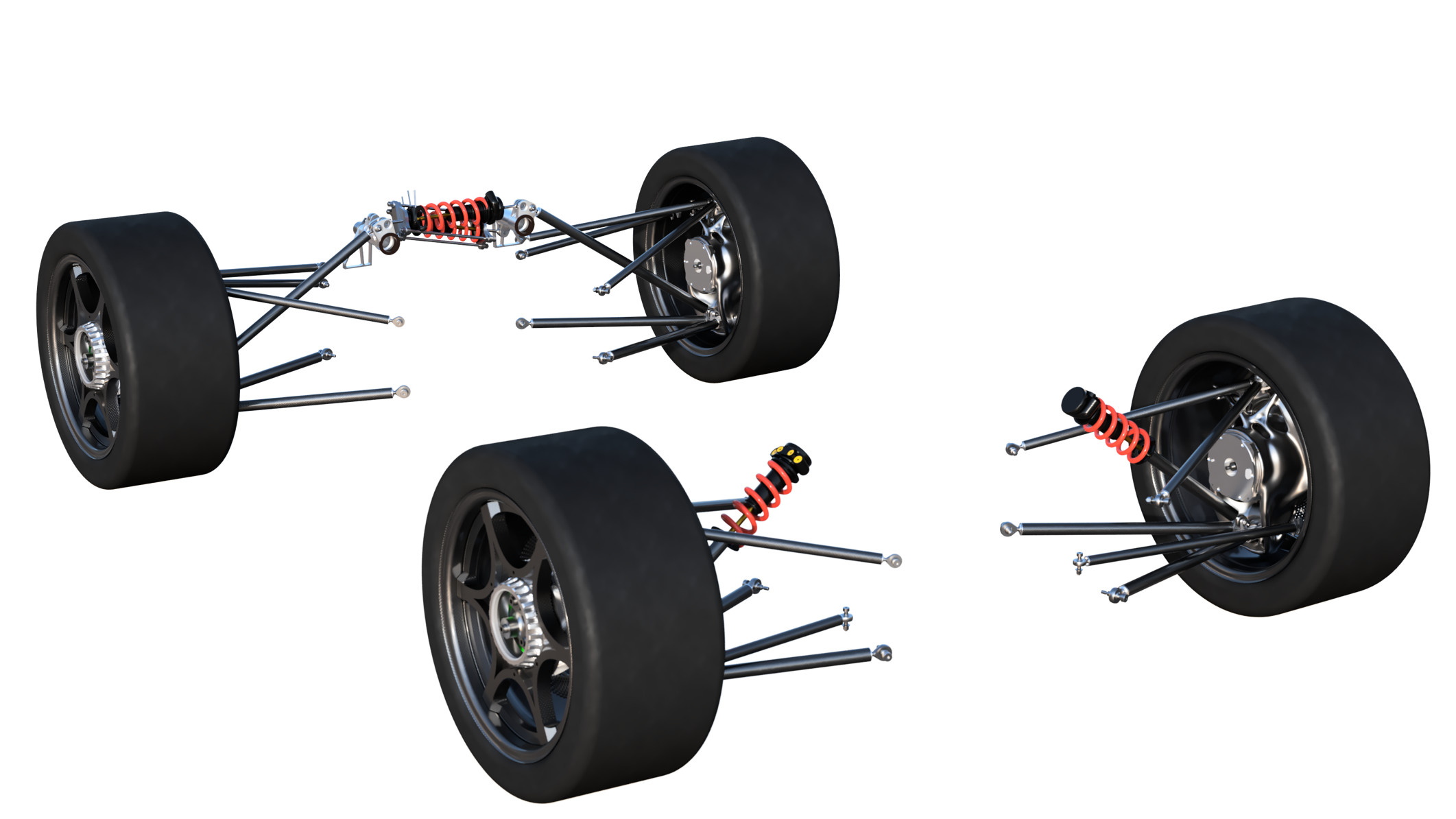
In addition to lap-time simulation, we use advanced full-vehicle simulation environments based on professional software. These tools support tuning of vehicle dynamics controls and suspension kinematics through standardized open-loop maneuvers. We can also integrate real-time driver inputs via simulator setup to extend driver training virtually.
Vehicle Dynamics Control
With our in-wheel motor concept and wheel-individual torque control, we can implement multiple vehicle dynamics control strategies. Besides wheel-slip control, this includes torque vectoring. These systems are designed, tested and integrated into the car.
Lap-Time Simulation
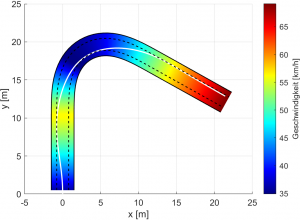
Our lap-time simulations allow precise analysis of how variable vehicle parameters affect total lap time. This ensures we exploit performance potential early in concept phase. We use modern methods such as QSS (quasi-steady-state) and OCP (optimal control problem), and continuously improve these approaches.
Sensor Systems
Beyond safety-critical sensors in drivetrain and driver interface, we deploy additional sensors dedicated to performance optimization. These systems must be selected and integrated carefully. Our goal is to expand sensing capability cost-effectively and gain deeper insight into vehicle behavior.
Vehicle Modeling
Realistic simulation requires robust vehicle models with varying levels of detail. These models must be reusable across different simulation environments. Accurate vehicle parameter identification is therefore a key part of our workflow.
Data Analysis
Careful analysis of simulation and test results is central to vehicle optimization. For this, we use a dedicated motorsport data-analysis platform with many interfaces and customization options, allowing us to exploit data effectively.